Wine Tasting Etiquette: Your Guide to Sommelier Know-How

Reading time: 10 minutes
You're sitting at an exclusive dinner in a Michelin-starred restaurant, the sommelier hands you the wine list, and suddenly you feel like you're taking an oral exam. As a sugarbaby, upscale culinary events are part of your lifestyle, but proper wine tasting etiquette can make the difference between awkward silence and impressive conversation. The good news: with the right knowledge, you'll carry yourself with confidence at every tasting and leave a lasting impression on your date.
Wine knowledge is long past being the domain of gray-bearded sommeliers. According to a 2023 study by the Deutsche Wein- und Sommelierschule Berlin (a German wine and sommelier school), interest among young women aged 20 to 35 in professional wine tastings rose by 42 percent. Learning the language of wine is far more than snobbish posturing. It's a key to elegant conversation and cultural understanding.
The Anatomy of a Professional Wine Tasting
Before you venture into technical terms, you should understand the basic structure. Every serious wine tasting follows a clear sequence divided into five phases. The Deutsches Weininstitut in Mainz standardized this system in 2022 and describes it as an internationally recognized standard.
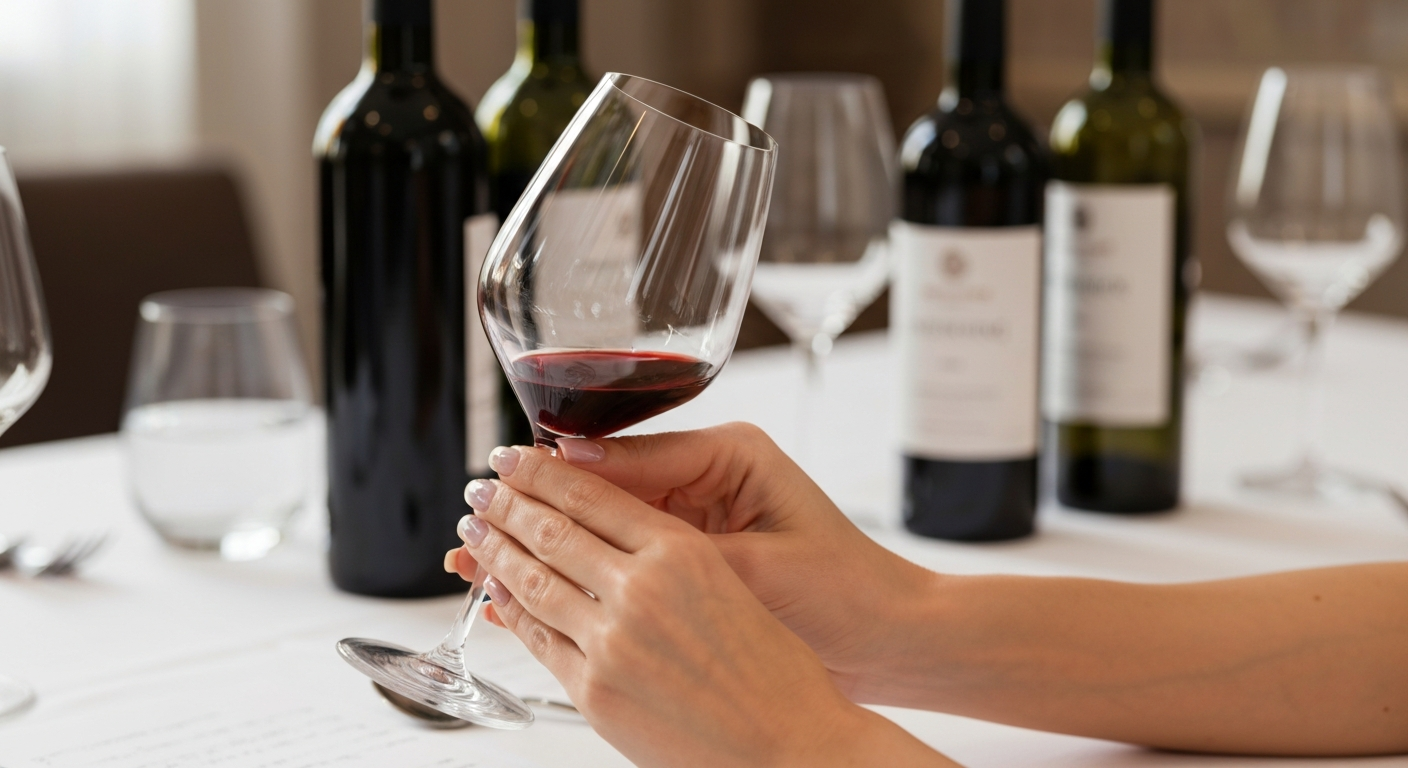
The first phase is visual inspection. You hold the glass slightly tilted against a white background and observe color, clarity and viscosity. A Pinot Noir from Burgundy, for example, shows a ruby-red transparency with brick-red reflections at the rim of the glass, while a young Cabernet Sauvignon shimmers deep violet.
Phase two focuses on smelling. Swirl the glass gently, never overdoing the circling, and slowly bring your nose to the rim. Professionals distinguish between the first nose without swirling and the second after aeration. With a Riesling from the Mosel, you typically pick up green apple, citrus and mineral notes.
Tasting Manners: What You Should Never Do
Proper behavior at wine tastings has unwritten rules. Avoid heavy perfumes, as they disturb everyone's sense of smell. The Association de la Sommellerie Internationale recommends in its 2021 code of conduct a minimum gap of 24 hours between applying perfume and attending a tasting.
When tasting itself: take only small sips and spread the wine around your mouth. Professional spitting into the provided spittoons is completely accepted at multi-course tastings with more than six wines. Nobody expects you to knock back twelve glasses of wine. On the contrary, responsible tasting manners show professionalism.
Decoding the Language of Wine: From Tannins to Terroir
When a sommelier talks about "well-structured tannins," they mean the phenolic compounds from grape skins and seeds that give the wine texture. In the mouth they feel slightly furry or astringent, especially pronounced in a Barolo from Piedmont or a Bordeaux blend.
The term "finish" describes how long the taste lingers after swallowing. In top wines, this can last 30 seconds or longer. A Château Margaux 2015, for example, shows an estimated 45-second finish with notes of dark chocolate and tobacco.
The mysterious word "terroir" sums up all the geographic factors that shape a wine's character: soil composition, climate, slope and even wind conditions. A Chablis tastes of chalkstone and sea air because the vineyards stand on ancient limestone soils full of fossil shells, a fact that enriches any conversation.
Sommelier Knowledge: Grape Varieties You Should Know
Six classic grape varieties are enough for confident conversations. Among whites, these are Chardonnay, Riesling and Sauvignon Blanc. Chardonnay from Burgundy shows buttery notes from malolactic fermentation, while New Zealand Sauvignon Blanc scores with gooseberry and freshly cut grass.
Among reds, Cabernet Sauvignon, Pinot Noir and Merlot dominate the spectrum. An Oregon Pinot Noir from Domaine Drouhin presents cherry and forest floor, quite unlike the powerful cassis and cedar aromas of a Napa Valley Cabernet.
The International Organisation of Vine and Wine (OIV) recorded over 1,368 registered grape varieties worldwide in 2023. But with these six classics, you already cover 85 percent of all upscale restaurant wine lists, a figure determined by the Weinwirtschaftsinstitut Geisenheim in 2022.
Practical Conversation Starters for Every Situation
Instead of generic statements like "This tastes good," you impress with concrete observations. Try phrases like: "I'm picking up distinct hints of blackcurrant. Could this wine possibly be from Bordeaux?" Questions like these show interest without coming across as a know-it-all.
If you're unsure, the technique of actively asking questions works perfectly. "What storage do you recommend for this vintage?" or "What dishes would you serve this wine with?" are questions sommeliers love, and they position you as an interested conversation partner.
On dates at exclusive locations such as gallery openings as a date location, you can subtly weave in your wine knowledge. The combination of an appreciation for art and culinary refinement demonstrates a well-rounded cultural education.
Knowing Your Grape Varieties: Regional Expertise as a Trump Card
Germany has 13 wine-growing regions, each with its own character. The Mosel stands for mineral Rieslings with racy acidity, while the Pfalz produces full-bodied, fruit-forward wines. The Dr. Loosen winery in Bernkastel has produced top Rieslings since 1798 and is a name that signals competence in any conversation.
French regions follow a more complex system. Burgundy is organized into Grands Crus, Premiers Crus and village appellations. A Corton-Charlemagne Grand Cru quickly costs $165 and up, while a Bourgogne Blanc can be had for $22. Both are Chardonnay, but with a world of difference in quality.
In Italy, the DOCG system governs the quality hierarchy. A Barolo DOCG from Piedmont must age for at least 38 months, 18 of them in wooden barrels. These details make the difference between superficial small talk and informed conversation.
Choosing the Right Glass: Form Follows Function
Different wines call for different glasses. The wide-bowled Burgundy glass with a large opening lets Pinot Noir breathe and concentrates the delicate aromas toward the nose. The narrower Bordeaux glass, on the other hand, directs the tannic Cabernet straight onto the tongue and minimizes contact with air.
Champagne belongs in a flute, since the slender shape preserves the bubbles longer. However, modern sommeliers increasingly rely on tulip-shaped glasses, which show off the bouquet better. Master Sommelier Konstantin Baum describes this development at length in his 2023 book "Die neue Weinkultur" ("The New Wine Culture").
From Theory to Practice: Your First Steps
Start with low-threshold wine tastings at local merchants or wine shops. Many offer free tastings on Saturdays where you can experiment without pressure. The Weinhaus am Dom in Frankfurt, for example, holds open tastings with four to six wines on the first Saturday of every month.
Online courses from the Weinschule Deutschland offer structured introductions starting at $87 for beginner courses. The WSET certification (Wine & Spirit Education Trust) is considered the international gold standard and begins with Level 1, which can be completed after just a weekend course.
Invest in a good beginner's book such as "The World Atlas of Wine" by Hugh Johnson and Jancis Robinson, whose 8th edition appeared in 2019 and is regarded as the bible of wine connoisseurs. With this reference work, you can answer 90 percent of all questions on your own.
Common Mistakes and How to Avoid Them
The biggest beginner mistake: holding the glass by the bowl instead of the stem. Your hand's warmth changes the wine's temperature and leaves fingerprints on the glass. Always hold white wine and champagne glasses by the stem; red wine glasses may be held at the base of the bowl.
Avoid filling the glass to the brim. The rule of thumb: white wine a third full, red wine half full at most. The air space in the glass is essential for the aromas to unfold. This rule applies even at a romantic observatory dinner, where the atmosphere might tempt you to pour generously.
Never use the wine itself to clink glasses. High-quality glasses are thin-walled and can be damaged by clinking. Instead, lift your glass slightly and nod to the person opposite you, a gesture that combines elegance with wine knowledge.
Wine Pairing: The Art of Food Pairing
The classic rule "white wine with fish, red wine with meat" falls short. What matters is the method of preparation and the seasoning. A grilled tuna can easily handle a light Pinot Noir, while a creamy chicken fricassee goes perfectly with a full-bodied Chardonnay.
Salty foods soften tannins and emphasize fruit. That's why a tannic Barolo goes superbly with Parmesan or aged Manchego. Sweetness, on the other hand, makes dry wines taste sour, so always pair desserts with wines that are at least as sweet as the dish itself.
The Michelin Guide recommends in its 2023 edition that on multi-course menus you move from the lightest to the strongest wine. A Riesling Kabinett to start, followed by a Pinot Gris, then a Spätburgunder (Pinot Noir) and finally an Eiswein (ice wine) with dessert. This progression is gentle on the palate and steadily increases the enjoyment.
Investing in Your Wine Education: Is It Worth It?
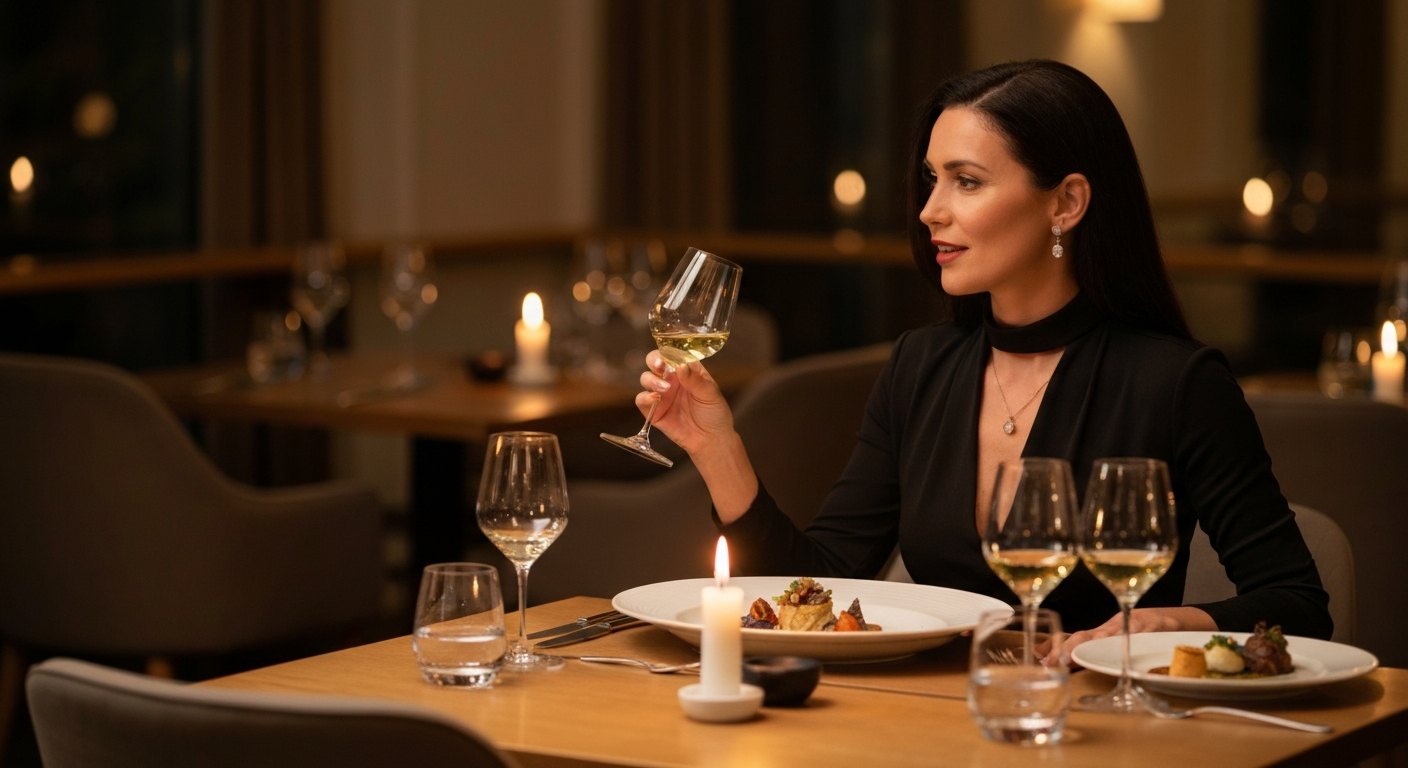
As a sugarbaby, culinary knowledge is part of your professional presentation. Just as career mentoring supports your personal development, wine knowledge expands your social capital. A 2022 survey by the Seeking Arrangement platform found that 73 percent of the sugar daddies surveyed value cultured conversation partners with a broad range of interests.
The financial investment is modest. A WSET Level 1 course costs between $220 and $385, but offers lifelong benefit. For comparison: a single dinner at a Michelin-starred restaurant often costs more, without leaving a lasting learning effect.
Time-wise, two hours a week is enough to build solid basic knowledge. Use apps such as Vivino to document the wines you've tasted or Wine-Searcher for price research. These digital helpers turn every tasting into a learning opportunity.
Cultural Dimensions: Wine as a Bridge for Conversation
Wine knowledge opens doors to history, geography and culture. A conversation about Rioja inevitably leads to Spanish history, since the region is closely tied to the Reconquista. Champagne tells of Dom Pérignon and the French monarchy. These narrative connections make conversations lively and multidimensional.
In international contexts, wine knowledge shows a cosmopolitan outlook. A South African Chenin Blanc from Stellenbosch, an Argentine Malbec from Mendoza or a Lebanese Château Musar demonstrate that your horizons reach beyond the European classics. This variety impresses especially on dates with well-traveled business people.
The Most Common Questions About Wine Tasting Etiquette
How do I behave properly at a wine tasting?
Hold the glass by the stem, swirl carefully, smell before tasting and take only small sips. Spit into the provided spittoons at multi-course tastings. Avoid strong perfumes and listen attentively to the sommelier. Ask specific questions instead of making general comments, and note down interesting wines for later research.
Which technical terms do I absolutely need to know?
Focus first on tannin, acidity, body, finish and terroir. These five terms cover the most important quality features. Expand your vocabulary step by step with aroma categories such as "red fruits," "oak notes" or "mineral." Avoid excessive shop talk; authenticity beats showing off.
How do I learn to tell grape varieties apart?
Start with blind tastings of the six main grape varieties: Chardonnay, Riesling, Sauvignon Blanc, Cabernet Sauvignon, Pinot Noir and Merlot. Buy two bottles of the same variety from different regions and compare their characteristics. Use aroma wheels as a visual aid and write down your impressions. After ten structured tastings, you'll reliably recognize the basic patterns.
What does a professional wine tasting cost?
Beginner tastings at wine merchants are often free or cost $11 to $22. Professional tastings at wine schools run between $44 and $130 for an evening with six to eight wines and expert guidance. Premium events with winemakers or at Michelin-starred restaurants can exceed $220, but offer exclusive access to rarities and expert knowledge.
Should I spit or swallow wine?
At tastings with more than six wines, spitting is professional and recommended. It preserves your judgment and shows that you focus on assessing quality rather than drinking alcohol. At small dinner tastings with three to four wines you can swallow, but make sure to drink enough water between courses. The choice shows responsibility, not weakness.
Your Roadmap to Wine Confidence
Mastering wine tasting etiquette isn't rocket science, but a combination of basic knowledge, practical experience and genuine interest. Start with the six main grape varieties, attend local tastings and invest in a beginner's course. Within three months you'll talk about wine with confidence and impress on every upscale date.
Combining wine knowledge with elegant conversation opens doors to circles that value culture and enjoyment. Together with your feel for special moments, every wine tasting becomes an unforgettable experience, for you and your companion.
Start today: visit a wine shop near you, buy two contrasting wines and begin your personal journey of discovery. The world of wine is waiting to be explored by you. With every glass your expertise grows, and so does your ability to shine in any social situation.