Riding Lessons: Equestrian Sport as a Career Investment
Reading time: 8 minutes
When your sugar daddy invites you to a polo tournament on Sylt or suggests a weekend at his stud farm, your posture decides the impression you make. Riding lessons for sugar babies open doors to exclusive circles that go far beyond riding itself - from charity horse races to networking events at equestrian estates where the elite meet.
Equestrian sport has been a status symbol of high society for centuries. According to a 2022 study by the German Equestrian Federation (FN), German horse owners invest an average of about $6,300 (5,800 euros) a year in their hobby - a clear sign of the financial reach of this community. As a sugar baby, with equestrian know-how you position yourself strategically in an environment where deals are closed and relationships are built.
Why Riding Lessons Take Your Social Skills to a New Level
Your first contact with horses fundamentally changes your body language. A 1,300-pound warmblood reacts instantly to insecure signals - you learn to show up present and confident. This nonverbal communication carries over directly to how you carry yourself at social events.
In adult riding lessons you develop skills that no coaching seminar teaches. The upright posture in the saddle shapes your walk and your presence. The Hamburg riding stable Gut Wulksfelde offers special courses for late starters from about $960 (890 euros) per 10-lesson card, focusing on exactly these aspects.
Posture as an Investment in How You Come Across
You can spot professional riders right away by their posture - even without a horse. The straight back, relaxed shoulders and confident stride are the result of years of practice. You don't need years to see first results: after 20 riding lessons, most people notice a clear improvement in their core tension.
Classical dressage teaches you subtle cues instead of crude commands. This finesse in communication pays off when you move in upscale circles. Much like good communication in sugar dating, it's about nuance rather than volume.
Finding the Right Riding School: Quality Markers for Beginners
Not every riding stable suits ambitious sugar babies. Look for riding schools with FN certification and trainers with a DOSB license. In Germany, the Bundeschampionate in Warendorf are considered a quality benchmark - stables whose riders compete there offer above-average training. In the US, look for barns affiliated with US Equestrian and trainers certified by organizations such as CHA or USDF.
Premium stables such as Gut Neuhaus near Munich or the Kurfürstliche Marstall in Rees offer not only excellent instruction but also the right ambiance. Here you meet like-minded people from the business elite, potential contacts for your network.
Planning Costs and Time Investment Realistically
For qualified private lessons, expect $50-70 per 30 minutes (45-65 euros in Germany). A solid foundation involves at least 40 hours over 6-9 months. Full gear with a riding helmet, boots and breeches costs $430-860 initially - invest in brands like Cavallo or Pikeur, which are standard in upscale circles.
- Riding helmet certified to EN 1384 (or ASTM/SEI in the US): $130-300 (Uvex, Samshield)
- Riding boots or paddock boots: $160-430 (Ariat, Königs)
- Full-seat breeches: $85-195 (Pikeur, Equiline)
- Riding gloves: $27-49 (Roeckl)
- Show jacket for competitions: $215-540
Riding Etiquette: The Unwritten Rules of the Equestrian World
Upscale horse culture runs on its own codes. When you enter an indoor arena, greet everyone loudly and clearly - a "good day" or "good morning", depending on the time of day. This ritual signals your presence to the other riders and prevents accidents.
Competitions have a strict dress code: show coat in black or navy, white breeches, black boots. For jumping and dressage classes at level L and above, these requirements under the German competition rules (LPO) are binding. Even as a spectator you score points with understated elegance - think of classic statement jewelry combinations that don't jingle or distract.
Using Competition Visits as Networking Opportunities
CHIO Aachen is considered the unofficial world championship of equestrian sport. The July event draws more than 350,000 visitors every year, including numerous entrepreneurs and decision-makers. A VIP ticket for the main grandstand costs from about $210 (195 euros) per day - an investment that pays off many times over through contacts.
Smaller but no less exclusive events like the Hamburg Derby in Klein Flottbek or the International Horse Show in Munich-Riem offer a more intimate atmosphere. Conversations at the champagne stand often lead to lasting connections.
From Beginner to Confident Rider: The Learning Path
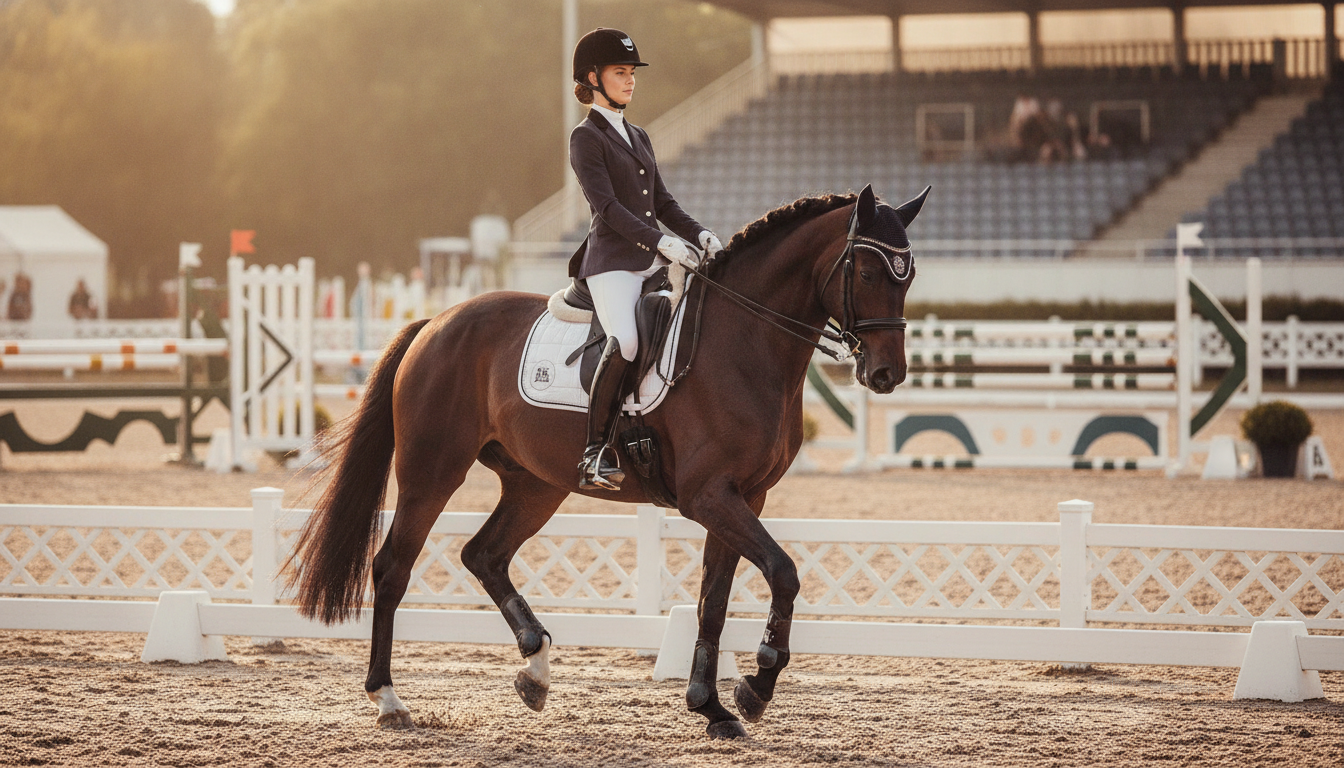
You'll spend your first lessons on the lunge line - the horse moves in a circle while the trainer corrects you. This phase typically lasts 5-8 hours. You learn the basic seat, develop balance and a feel for the movement.
From lesson 10-15, free riding in a group begins. Here you coordinate speed and direction on your own for the first time. The challenge: using reins, legs and weight at the same time while keeping the other riders in view. According to the FN's training guidelines, after 30 hours you should confidently master the walk, trot and canter.
Special Disciplines for Different Goals
Dressage focuses on precision and harmonious movement. This discipline is perfect if you want to convey elegance and control. Show jumping demonstrates courage and determination - ideal for dynamic personalities. Eventing combines both aspects with cross-country riding and is considered the premier discipline.
For social occasions, starting with dressage is recommended. The movements are slower and more controllable than in jumping, and the risk of injury is lower. Renowned dressage stables such as Gestüt Warendorf or Hof Kasselmann offer special courses for adult beginners.
Safety First: A Realistic Risk Assessment
According to the accident statistics of the German statutory accident insurer VBG, equestrian sport is among the top 10 riskiest sports. About 39,000 reportable riding accidents occur in Germany every year. Most result from falls or kicks - rarely life-threatening, but potentially career-damaging for models.
Minimize risks through qualified instruction on experienced school horses. In the first few years, avoid wild trail rides or spirited private horses. Supplemental riding accident insurance costs $9-16 a month and covers specific risks that ordinary accident insurance excludes.
Learning Equestrian Sport as Part of Your Personal Branding
Instagram posts from the riding stable generate on average 23 percent more engagement than standard lifestyle content, according to a 2023 analysis by Influencer Marketing Hub. The combination of animals, sport and luxury lifestyle triggers emotional reactions.
Authenticity counts: show your learning process instead of perfected results. An honest post about your first fall (with self-irony) comes across as more likeable than staged professional shots. Use hashtags like #equestrianlife #horsebackriding or #dressagerider for maximum reach in the equestrian community.
Combine riding posts strategically with other upscale interests. A weekend at the stud farm can be perfectly paired with a wine tasting at the neighboring winery - content gold for your profile.
Networking Through Riding Clubs
The Hamburg Polo Club or the Düsseldorf Riding and Driving Club are more than sports clubs - they're social institutions with strict admission criteria. Memberships cost $860-2,700 a year but give access to exclusive events and a network of successful business people.
Starter competitions at level E are doable even for beginners after 1-2 years. Taking part shows ambition and seriousness - qualities that are valued in upscale circles. Even without a top placing, you gather valuable experience and contacts.
Long-Term Perspective: From Hobby to Way of Life
Experienced riders consistently report that equestrian sport changes your personality for good. The responsibility for a living being, the discipline of regular training and coping with setbacks build strength of character.
After 2-3 years of intensive training, you have solid knowledge that makes you appear confident in conversations with horse owners. You understand the fascination behind the sport, know the important competitions and can discuss horse-breeding topics competently - real added value at social occasions.
Frequently Asked Questions About Riding Lessons for Sugar Babies
How long does it take until I sit securely in the saddle?
With weekly lessons, you reach a level after 6-9 months that allows safe trail rides in a group. For independent riding without supervision, you should have completed at least 50-60 hours. Individual learning speed varies greatly - prior athletic experience speeds up the process.
What riding gear do I really need as a beginner?
For the first lessons, a riding helmet (often available on loan at the stable), comfortable pants without an inner seam and shoes with a small heel are enough. Only invest in special riding clothes after 5-10 lessons, once you're sure the sport suits you. The priority is a well-fitting, safety-certified helmet meeting EN 1384 or VG1 01.040 (in the US, ASTM/SEI).
Can I still start riding at 25 or 30?
Absolutely - about 35 percent of riding students at German stables are over 25, and the share is rising. Adults often learn faster than children because they implement instructions better and assess risks more realistically. Your physical fitness matters more than your age.
How do I find the right riding stable as a sugar baby?
Visit several stables in person and look at cleanliness, the condition of the horses and the trainers' qualifications. Ask about FN certification and trainer licenses. The stable should be close to you (30 minutes' drive at most), since regular training is crucial. Premium facilities often offer trial lessons.
What concrete equestrian networking opportunities are there for sugar babies?
Competitions like CHIO Aachen, the Hamburg Derby or the German Masters in Stuttgart offer VIP areas with networking events. Charity horse races combine sport with social engagement. Riding clubs regularly organize club evenings and summer parties - ideal opportunities for casual contacts in a relaxed atmosphere.
Conclusion: Riding Lessons as a Strategic Career Investment
Riding lessons for sugar babies offer far more than physical activity. You develop body control, a confident presence and access to exclusive networks. The investment of $2,150-3,800 in the first year pays off many times over through contacts, personal growth and social participation.
Start with qualified instruction at a renowned stable. Combine the training strategically with other upscale activities and use social media for authentic personal branding. Within 12-18 months, you'll have the basics that make you look competent and self-assured in equestrian circles.
Your next steps: book trial lessons at no fewer than three certified stables in your area. Invest in a high-quality riding helmet as a sign of your serious intent. And above all: enjoy the process - the bond between human and horse is unique and will shape you for good.