Observatory Dinners: Romance Under the Night Sky
Reading time: 12 minutes
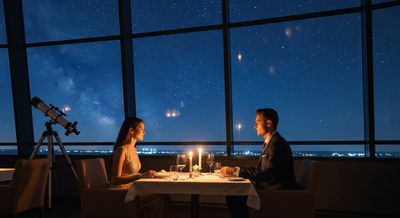
Picture this: you're sitting with your date at an exclusive dinner while the starry sky shines in full glory above you and an astronomer explains the secrets of the universe. An observatory dinner combines culinary refinement with cosmic romance and lifts the concept of extraordinary date experiences to a whole new level. For sugar babies who want to impress their companions with unforgettable moments, this combination of gastronomy and astronomy offers the perfect mix of education, elegance and intimacy.
While classic restaurant dates have their charm, observatory dinners rely on exclusivity and intellectual depth. This extraordinary date idea appeals especially to discerning partners who value cultural experiences and unique moments - exactly what is appreciated in upscale sugar dating.
Why Observatory Dinners Are Especially Convincing as a Date Format
An astronomy date at an observatory offers several advantages over conventional restaurant visits. According to a 2019 study by the American Psychological Association, shared new experiences strengthen the emotional bond between couples more than routine activities. A dinner under the stars creates exactly this novelty.
The combination of a scientific program and culinary enjoyment creates natural conversation starters. While you look through a telescope at Jupiter together or admire the rings of Saturn, casual dialogue about life's big questions emerges. This depth sets an observatory dinner clearly apart from the superficial small talk of a standard restaurant visit.
For sugar babies, this date option also means clear added value for your own development. The knowledge of astronomical phenomena you pick up at such events enriches your cultural education - an aspect that is often named as an important development goal in career mentoring for sugar babies.
Top Venues for Observatory Dinners in German-Speaking Countries
Several renowned observatories have recognized the potential of dining events and regularly offer exclusive dinner programs. Choosing the right venue largely determines the success of your astronomy date.
Volkssternwarte München: Pioneer of Astronomical Dining
The Volkssternwarte München has regularly organized "Dinner Under the Stars" events since 2015, combining a 4-course menu with telescope observations. The events take place between April and September and cost about $100 (95 euros) per person. The historic building from 1947 offers a romantic backdrop with a view over the rooftops of Munich.
Particularly impressive is the 31-inch (80 cm) reflector telescope, one of the largest publicly accessible telescopes in Germany. In clear weather, visitors can make out details on the lunar surface that aren't visible to the naked eye. The combination of traditional Bavarian cuisine and a cosmic view makes this venue ideal for upscale dates.
Sternwarte Bochum: Industrial Romance Meets Outer Space
The Planetarium Bochum offers "Star Dinner" events several times a year that combine scientific talks with multi-course menus. With over 6 million visitors since its opening in 1964, the institution is among the best-known astronomy education centers in Germany. The price is about $130 (120 euros) per person for a 5-course menu with wine pairing.
The special feature: before dinner, guests get a private planetarium show under the 65-foot (20 m) dome, in which over 9,000 stars can be projected. This intimate atmosphere makes a perfect start to a romantic evening before moving on to the culinary part.
Urania-Sternwarte Zürich: Alpine Astronomy With Swiss Precision
The Urania Observatory in the heart of Zurich has hosted exclusive "Gourmet Under the Stars" evenings since 2018 in cooperation with the restaurant Clouds in the Prime Tower. The format combines telescope observations in the historic 1907 observatory with a subsequent dinner on the 35th floor with a panoramic view over Zurich and the Alps.
With prices from about $200 (180 Swiss francs) per person, this experience is one of the premium options. The investment is especially worthwhile for important dates or special occasions where you want to leave a lasting impression.
How to Plan Your Perfect Observatory Dinner
Preparing an astronomy date takes more planning than a spontaneous restaurant visit. This strategic approach, however, signals to your companion exactly the appreciation that is expected in upscale dating.
Book at least 4-6 weeks in advance, since the limited seats at observatory dinners sell out quickly. Most observatories accept a maximum of 20-30 guests per event to ensure the quality of the telescope observations. Contact the institution directly by email or phone - many events aren't offered through standard booking platforms.
Pay attention to the moon phase when choosing a date. New moon nights offer the best conditions for deep-sky observations of galaxies and nebulae, while full moon phases are ideal for seeing lunar craters and mountain ranges in every detail. Most observatories communicate the astronomy program in advance so you can voice your preferences.
Dress Code and Preparation
An elegant casual style typically applies to an observatory dinner. Despite the upscale dining, women should pay attention to practical aspects: flat shoes or low heels are advisable, since many observatories are reached by stairs and telescope observations take place standing up.
Bring a light jacket or wrap, even in summer. Even in warm weather, temperatures on observation platforms can drop noticeably in the evening. The Volkssternwarte München, for example, sits at 1,770 feet (540 meters) above sea level, where it gets noticeably cooler in the evening than in the city.
Skip strong perfume or intense fragrances. In the enclosed rooms of observatories these can be disruptive and show a lack of consideration for other guests - a no-go at exclusive date experiences.
Conversation Topics and Etiquette on an Astronomy Date
A dinner under the stars offers countless natural starting points for interesting conversation. Use the scientific content as a jumping-off point for deeper dialogue about philosophy, travel or visions of the future.
Show genuine interest in the astronomical explanations, even if physics isn't your strong suit. Studies from the University of Rochester from 2016 show that curiosity and willingness to learn are perceived as particularly attractive traits. Ask questions of the astronomers present - it signals curiosity and intellect.
Avoid being glued to your smartphone during the telescope observations. The red displays that many observatories provide serve a purpose: white light destroys the eyes' dark adaptation and impairs observing ability for 20-30 minutes. Be sure to respect this rule.
From Astronomy to the Personal Level
Use the cosmic backdrop as a metaphor for deeper conversation. Questions like "Which planet would you most want to visit first?" or "What would you tell an alien civilization about humanity?" open the door to discussions of values and life philosophies.
This technique works especially well on discerning dates who appreciate substance. Much like with art openings as date locations, it's about using cultural experiences as a catalyst for authentic connections.
Making the Most of the Culinary Component

At most observatory dinners, the menu is designed by local dining partners. Quality varies considerably - find out about the caterer or restaurant partner beforehand. Online reviews on platforms such as Google Maps or TripAdvisor give a sense of the quality to expect.
Communicate any allergies or dietary preferences early. Most organizers offer vegetarian alternatives, but vegan or gluten-free options often have to be requested in advance. This attention to detail shows professionalism and consideration - qualities expected at exclusive date experiences.
Use the pauses between courses for telescope observations. Most programs are timed so that 20-30 minutes for astronomy activities are scheduled between the starter, main course and dessert. This structure keeps the dinner from becoming an afterthought or, conversely, the astronomy content from being shortchanged.
Adding Extra Experience Elements
Raise the wow factor of your astronomy date with thoughtful extras. Some observatories offer the option of having a star named after your date - a symbolic gift that costs about $55-110 (50-100 euros). The International Star Registry has carried out such registrations since 1979, even though they aren't scientifically official.
Plan a surprise for the end of the evening. A photo book with astronomy images prepared from the NASA website (available free at nasa.gov/multimedia/imagegallery), with personal notes about your time together, shows creativity and attentiveness.
Consider combining the observatory dinner with a stay at a nearby boutique hotel. The Volkssternwarte München, for example, is only 15 minutes from the Hotel Bayerischer Hof, while the Urania Observatory in Zurich sits right next to several luxury hotels on the Limmat riverbank. This planning allows a relaxed wind-down without time pressure.
Investment and Cost-Benefit Analysis
An observatory dinner typically costs between $95 and $215 (90-200 euros) per person, depending on venue, menu quality and the accompanying program. This investment sits in the mid to upscale segment of extraordinary date ideas.
Compare the cost with alternative premium dates: a Michelin-starred restaurant charges similar prices without the added educational and experiential element. A helicopter sightseeing flight costs considerably more for a shorter duration. Theater or opera visits offer cultural value but fewer opportunities to interact during the performance.
The return on investment is especially high if your date values education, science or extraordinary experiences. According to a 2022 Luxury Travel Magazine survey, 68% of wealthy singles prefer "experience-oriented dates" over "materialistic gifts". An observatory dinner serves exactly this preference.
Avoiding Common Mistakes
Don't underestimate the weather dependence of astronomical observations. Most observatories offer an alternative indoor program with planetarium shows or multimedia presentations when the sky is overcast. Still, the experience loses some magic without real telescope observations. Check the weather forecast a week before the date and, if necessary, contact the observatory about rebooking options.
Avoid exaggerated expectations of astronomical phenomena. Galaxies and nebulae often appear through telescopes as pale, gray smudges - not in the colorful hues of professional NASA photographs. Set realistic expectations with your companion to prevent disappointment. Jupiter with its moons or Saturn with its rings, however, always offer impressive sights.
Allow enough time. Observatory dinners typically last 3-4 hours. Rushing or leaving early comes across as disrespectful to the organizers and other guests. Communicate the length of the event in advance so both partners can enjoy the evening without time pressure.
Follow-Up and Lasting Memories

The quality of a date is also measured by the memories it leaves behind. Invest in the follow-up to your observatory dinner to deepen the positive impression.
Many observatories offer professional astrophotography services or allow your own smartphone photography through the telescope. Use this opportunity to create unique keepsake pictures. The Volkssternwarte München, for example, often provides digital photo galleries after events that participants can download.
In the days after the date, send a link to an interesting astronomy article or documentary that fits thematically with what you experienced. The BBC production "The Planets" (2019) or the Netflix series "Our Universe" offer high-quality content that ties in with your shared observations. This follow-up shows that the date was more than a one-off activity for you.
Much like with wellness routines between dates, it's about staying present and maintaining connection even between in-person meetings. A thoughtful astronomy reference creates a common thread in your communication.
Scientific Background for Impressive Conversations
Prepare with a few astronomy facts you can elegantly work into conversation. The light we see from the Andromeda Galaxy took 2.5 million years to reach us - so you're looking into the past together. This information gives the moment philosophical depth.
Saturn, which you may observe through the telescope, could float on water because its density is lower than that of water. Surprising details like this show education without sounding preachy and keep the conversation lively.
The International Dark-Sky Association has documented since 1988 how light pollution affects our view of the night sky. In big cities often only 20-50 stars are visible, whereas under ideal conditions over 4,500 stars could be seen with the naked eye. This context makes the privileged experience at an observatory even more valuable.
Taking Advantage of Seasonal Highlights
Different seasons offer different astronomical highlights. In winter, nights are longer and the sky is often clearer, creating better observing conditions. The constellation Orion with its famous nebula is especially visible from December to March and offers spectacular telescope views.
Summer months allow observation of the Milky Way in its full glory, especially in July and August. The warmer temperatures make longer outdoor observation more pleasant, even though astronomical twilight doesn't set in until around 10:30 p.m.
Plan your observatory dinner around special astronomical events. The Perseid meteor shower in mid-August or the Geminids in December offer additional spectacle. NASA publishes annual calendars with all relevant astronomical events at nasa.gov/skywatching, which help with scheduling.
Alternative Formats for Different Relationship Phases
A complete observatory dinner is especially suited to established sugar dating relationships or important milestones. For earlier dating phases, there are lower-threshold astronomy options.
Many observatories offer regular tours without a dinner component for $16-27 (15-25 euros) per person. These 90-minute programs let you get to know the venue and test interest in astronomy topics before you invest in a premium event.
Mobile observatory services bring telescopes to private events or special locations. Providers such as "Sternwarte to go" in Germany organize such arrangements from about $430 (400 euros) for a 2-hour private event. This option offers maximum flexibility and exclusivity.
FAQ: Common Questions About Observatory Dinners
- Is prior knowledge of astronomy required for an observatory dinner? No, the programs are designed specifically for beginners. Professional astronomers explain all phenomena clearly and answer questions at any level of complexity. Your curiosity and openness count for more than prior knowledge.
- What happens in bad weather or with an overcast sky? Most observatories offer alternative indoor programs with planetarium shows, multimedia presentations or virtual reality experiences. The dinner takes place in any case. Check the cancellation terms of the respective institution when booking.
- Can I book an observatory dinner exclusively for just the two of us? Many observatories offer private events for 2-10 people for an additional fee. Costs start at about $540 (500 euros) for a couple and include personal guidance from an astronomer. Contact the observatory directly for individual arrangements.
- Which season is best for an astronomy date? Each season has specific advantages: winter scores with clear skies and stars visible for longer, summer with more pleasant temperatures and Milky Way observations. Choose based on the available astronomical events and your personal comfort preferences.
- Are observatory dinners suitable for a first date? That depends on your date's personality. For people interested in science or adventure it can be perfect. For uncertain first meetings, a shorter observatory tour is recommended as a test before you invest in a multi-hour dinner event.
Conclusion: Observatory Dinners as an Investment in Unforgettable Moments
An observatory dinner combines a romantic evening with intellectual depth in a way that conventional restaurant dates can't match. As an extraordinary date idea for upscale tastes, this experience positions you as a sugar baby who values substance, education and unforgettable moments - qualities that are especially appreciated in discerning dating relationships.
The combination of culinary excellence, scientific fascination and a cosmic backdrop creates memories that last well beyond the evening itself. With thoughtful planning, genuine interest and the right venue, your dinner under the stars becomes a highlight that takes your relationship to a new level.
Invest in this special experience and use the magic of the night sky to make your next date something truly extraordinary. The stars are waiting to witness your shared story.