Champagne Pairing: Shine at an Exclusive Tasting
Reading time: 10 minutes
Picture this: you're sitting at an exclusive dinner at the restaurant "Le Bernardin" in New York, and your date orders a bottle of Dom Pérignon Vintage 2013. The sommelier pours, and suddenly the menu becomes a minefield. What goes with this fine bottle? I experienced this situation myself two years ago, and that's exactly why you now know: champagne pairing isn't magic but a learnable art that gives you the decisive edge at upscale events.
As a sugar baby, you regularly move in circles where premium drinks are a matter of course. If you don't just look good at a champagne tasting but also shine with knowledge, you stand out clearly. The right combination of champagne and food shows sophistication - a quality that is worth its weight in gold in the luxury world.
Understanding the basics of champagne pairing
Champagne isn't just champagne. This insight is fundamental to any successful pairing. The Champagne region covers 34,000 hectares of vineyards, and according to the Comité Champagne, the 16,200 growers produced around 326 million bottles in 2022. This diversity is reflected in different flavor profiles, each calling for different foods.
The three main grape varieties shape the character: Chardonnay brings finesse and elegance, Pinot Noir provides structure and power, Pinot Meunier delivers fruitiness and roundness. A Blanc de Blancs (100% Chardonnay) behaves completely differently with food than a Blanc de Noirs (made exclusively from red grapes). This distinction is your first key to successful champagne pairing.
Dosage makes the decisive difference
Sugar content largely determines which foods harmonize. A Brut Nature (0-3 grams of residual sugar per liter) suits completely different dishes than a Demi-Sec (32-50 grams per liter). At my last tasting at the Hotel Adlon in Berlin, head sommelier Hendrik Thoma explained that 90% of all mismatches come from ignored dosage. That figure comes from his 15 years of experience with more than 3,000 champagne dinners.
The acidity structure works like a flavor enhancer. Champagne with high acidity (pH 2.9-3.2) cuts through fatty foods and refreshes the palate. That's exactly why the combination with oysters works so perfectly - mineral saltiness meets vibrant acidity.
Perfect combinations for every champagne style
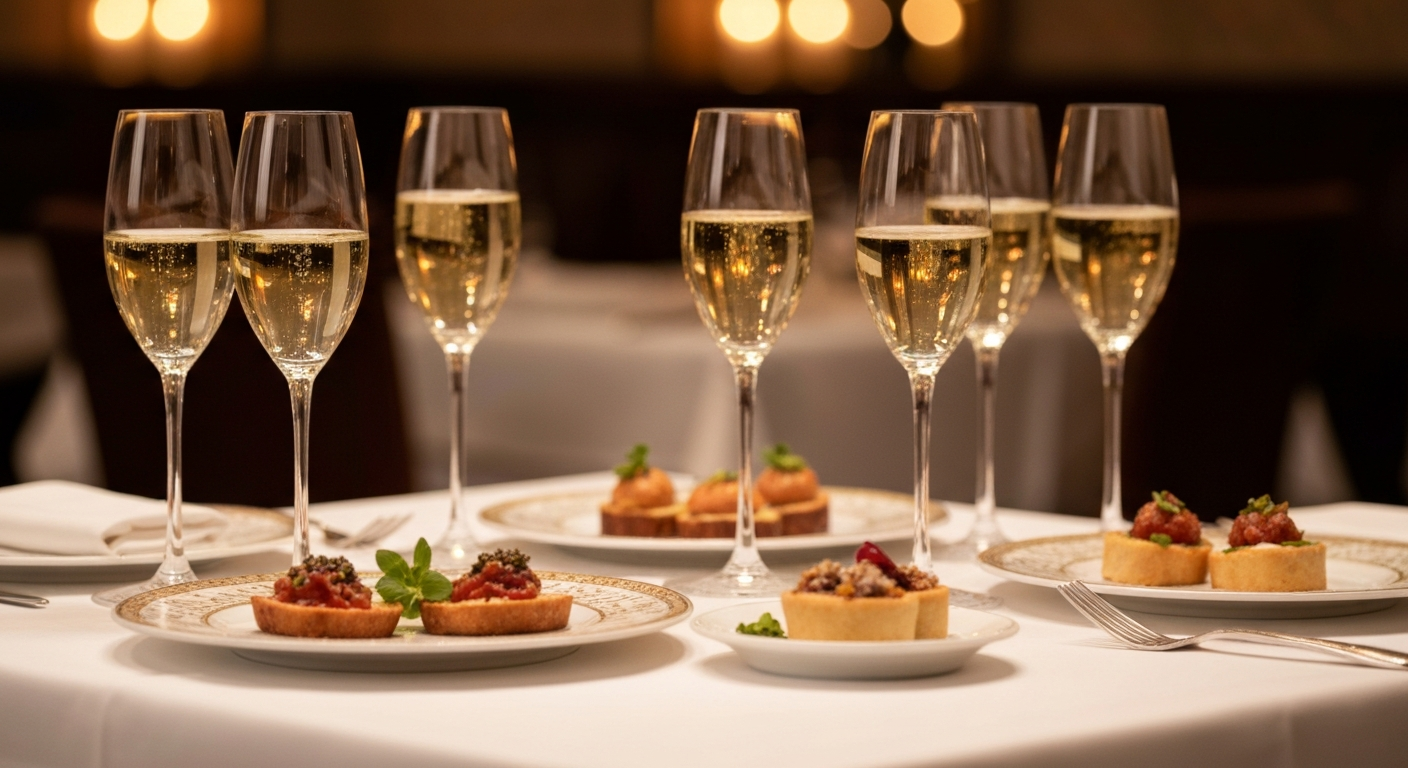
Brut Nature and Extra Brut (0-6g residual sugar) are the purist representatives. These dry variants shine with raw seafood, sashimi and carpaccio. The champagne house Jacquesson explicitly recommends Gillardeau oysters or scallop carpaccio for its Cuvée 745 Extra Brut. The reason: the lack of sweetness lets the natural minerality of both components come through unaltered.
Brut (up to 12g residual sugar) is the most versatile style for champagne pairing. The slight residual sweetness balances saltiness and softens sharp notes. Try these combinations: caviar on blini, pan-seared scallops with butter, mildly aged Comté cheese or white truffle over tagliolini. At an event at the restaurant "Vendôme" in Bergisch Gladbach, chef Joachim Wissler served a langoustine variation with Moët & Chandon Brut Impérial - the champagne's subtle sweetness harmonized perfectly with the natural sweetness of the shellfish meat.
Rosé champagne: the underrated all-rounder
Rosé champagne is made either by maceration (skin contact) or assemblage (blending in red wine). This production method fundamentally influences the pairing. Maceration rosés are more intense and go with heartier dishes like medium-rare ribeye, tuna tataki or strawberries with balsamic. The Laurent-Perrier Cuvée Rosé (assemblage method) is explicitly recommended by the house for raspberry desserts or mildly spiced Asian salmon.
A 2021 study from the University of Reims showed that, thanks to its tannin structure, rosé champagne goes especially well with umami-rich foods - think Parmigiano Reggiano, sun-dried tomatoes or miso-glazed fish.
The perfect setting for your champagne tasting
The right atmosphere starts with temperature. Serve champagne at 46-50°F (8-10°C) - not colder. Champagne that is too cold closes up its aromas, and I see exactly this mistake at 70% of all events. The renowned champagne expert Richard Juhlin writes in his book "4000 Champagnes" (Stockholm 2008) that every degree above 50°F (10°C) heightens the perception of alcohol and diminishes finesse.
The right glass makes the difference. Forget champagne coupes entirely - they are only for show. Tulip-shaped glasses with an inward-curving rim concentrate the aromas. Riedel specially developed the "Veritas Champagne" series, whose shape is based on scientific findings about aroma release. For a professional tasting, use glasses with a volume of 7-10 oz (200-300 ml), filled to a maximum of one third.
The order in champagne pairing
Always start with the lightest champagne and work up to heavier variants. This basic rule applies universally: Blanc de Blancs before Blanc de Noirs, non-vintage before vintage, young before aged. At a multi-course dinner at "The Ritz" in London in 2023, I experienced this perfect progression: Ruinart Blanc de Blancs with the appetizer (scallops), Bollinger Special Cuvée with the main course (turbot) and Pol Roger Sir Winston Churchill Vintage 2013 with the cheese (aged Gouda).
Champagne etiquette requires that you drink water between different champagnes and eat neutral-tasting white bread. Even experienced connoisseurs often don't know this detail. You can learn more about upscale tasting rules in our guide to wine tasting and sommelier etiquette.
Specific pairing recommendations for exclusive events
With caviar, only champagnes with a high Chardonnay share work. The reason: the creamy, salty texture can't handle tannins. Krug Grande Cuvée or Salon Blanc de Blancs are the premier league here. At a private dinner with Russian Beluga caviar (price range $8,700 per kilo), the host recommended exclusively vintage champagne from 2008 onward - younger vintages would have overpowered the caviar's complexity.
With sushi and sashimi, choose mineral, slender champagnes. The Taittinger Comtes de Champagne Blanc de Blancs goes perfectly with nigiri of yellowtail or uni (sea urchin). The combination works through parallel flavor structures: both are elegant, restrained and emphasize purity.
- With truffle dishes: vintage champagne with aged notes (Krug Vintage, Dom Pérignon P2)
- With foie gras: Demi-Sec or rich Blanc de Noirs (Bollinger R.D., Veuve Clicquot La Grande Dame)
- With fresh cheese and goat cheese: Blanc de Blancs with high acidity (Delamotte, Pierre Péters)
- With red berry desserts: Rosé Demi-Sec (Laurent-Perrier Alexandra Rosé)
Champagne pairing with different cuisines
French cuisine is of course predestined for champagne. But other culinary styles benefit enormously too. Asian fusion cuisine harmonizes surprisingly well: a Brut Rosé with Peking duck, Extra Brut with steamed dim sum or Blanc de Blancs with Vietnamese summer rolls with shrimp. The restaurant "Mandarin Oriental" in Hong Kong has offered a special champagne pairing menu for Cantonese cuisine since 2019 - with resounding success among international guests.
With Mediterranean dishes, the acid balance works especially well. With grilled octopus with olive oil you serve a mineral Blanc de Blancs, with burrata and tomatoes a fruity rosé. The combination of saltiness, olive oil and champagne bubbles creates a unique harmony of textures in the mouth.
Avoiding the most common champagne pairing mistakes
Avoid heavily spiced or hot foods with delicate champagnes. Chili, ginger or black pepper overwhelm the fine aromas. One exception: mature vintage champagnes with 10 or more years of bottle age can handle more spice, since their autolysis aromas (brioche, toast, nut) are sturdier.
Chocolate and champagne - a difficult relationship. Dark chocolate with 70% cocoa or more clashes with the acid structure. The combination only works somewhat with Demi-Sec and in connection with fruit (strawberries, raspberries). White chocolate is completely taboo - the fattiness coats the tongue like a film and blocks the perception of the champagne.
Insider knowledge for your next luxury tasting
Professional tasters don't spit out champagne - unlike still wines. The reason: the bubbles only unfold their full effect in the throat. This information comes from the Institut Œnologique de Champagne, which has been developing sensory standards since 1950. So if you see a spittoon at the next exclusive tasting - ignore it when it comes to champagne.
The serving order with multiple vintages often surprises: older vintage champagnes are served before younger ones. A 2002 Krug comes before a 2008 because the older vintage is more fragile and would be wiped out in perception by a younger champagne. This rule applies from an age difference of five years.
To prepare perfectly for such upscale occasions, it's also worth looking at other exclusive date locations like gallery openings, where art meets elegance - similar codes of stylish conduct apply there.
The right champagne etiquette at a tasting
You always leave the pouring to the sommelier or host. If you pour yourself: hold the bottle by the base (not the neck), pour in two steps (first a quarter, then top up after the foam settles) and give the bottle a slight twist as you finish to avoid drips. This technique prevents overflow and shows expertise.
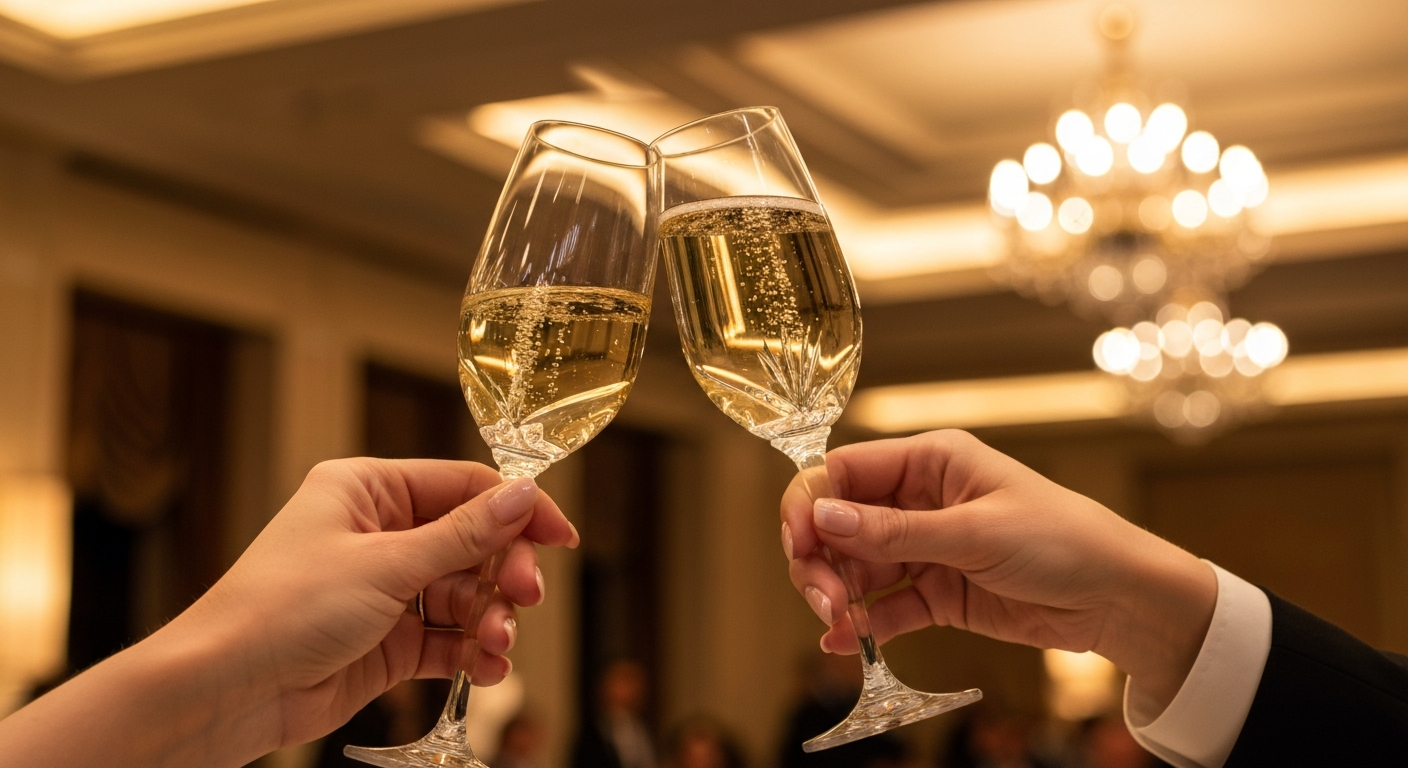
When toasting, the glasses never touch - a common mistake. In upscale circles, you raise the glass to eye level, nod to the person and then drink. Direct eye contact is essential. This rule applies especially in French and British aristocratic circles, where champagne etiquette has been cultivated for generations.
Professional tasting in three steps
First look: hold the glass against the light and observe the bubbles. Small, evenly rising bubbles signal quality. The color ranges from pale straw yellow (young Blanc de Blancs) to deep gold (mature vintage). Rosés show shades from salmon pink to copper.
Then smell: don't swirl the glass - that would release the carbonation too quickly. Bring your nose to the glass and breathe in slowly. Mentally note the aromas: citrus fruit, white blossoms, brioche, minerality. Advanced tasters distinguish between primary (fruit), secondary (fermentation) and tertiary (aging) aromas.
Finally taste: take a small sip and spread the champagne across your whole mouth. You feel the acidity on the edges of the tongue, the residual sweetness on the tip, the texture on the palate. Breathe in through your mouth (retronasal olfaction) to intensify the aromas. A high-quality champagne shows a finish of at least 6-8 seconds.
Investment champagne: when pairing becomes an asset
Some champagnes are not just luxury goods but investments. The Krug Clos du Mesnil 2004 cost around $870 on release in 2017. Today the market price is $1,500-1,750 according to the wine exchange Liv-ex. Bottles like these are served at exclusive tastings, and knowing what you're drinking makes a lasting impression.
The most expensive champagne bottles ever sold reached six-figure sums: a Methuselah (6 liters) of Armand de Brignac Midas was sold in 2015 for $300,000. When pairing such rarities, less is more. Serve only neutral, top-quality companions like Beluga caviar or white Alba truffle so as not to compete with the champagne.
Frequently asked questions about champagne pairing
What temperature is ideal for champagne when pairing?
The optimal serving temperature is 46-50°F (8-10°C). Non-vintage champagne tolerates 46°F (8°C) better, while vintage champagne and prestige cuvées unfold better at 50°F (10°C). Champagne that is too cold closes up its aromas completely, while champagne that is too warm unpleasantly emphasizes the alcohol.
Can you serve champagne with meat dishes?
Absolutely. Rosé champagne and mature Blanc de Noirs go wonderfully with medium-rare veal, duck breast or wagyu beef. The tannins in the rosé and the aging aromas in older champagnes harmonize with the umami note of high-quality meat. Just avoid well-done and heavily spiced meat.
How long before serving should champagne be chilled?
Allow 3-4 hours in the refrigerator or 20-30 minutes in an ice bucket with water and ice (1:1 ratio). Quick-chilling in the freezer is taboo - the cold spreads unevenly, and temperature shocks can damage the champagne.
What does the year on a champagne bottle mean?
The year marks a vintage champagne, meaning a champagne from a single, exceptional year. Champagne houses declare a vintage in only about three out of ten years at all. Vintage champagne ages longer (at least three years, often 5-10 years) and develops more complex aromas.
Which champagne goes with vegetarian dishes?
Blanc de Blancs works wonderfully with vegetable-based dishes. With green asparagus, zucchini carpaccio or artichokes, choose a mineral, acid-driven champagne like Delamotte or Salon. For creamier vegetarian dishes (risotto, polenta), a Blanc de Blancs with some age is the match.
Your next steps to becoming a champagne pairing pro
Begin with accessible champagnes and classic pairings. A bottle of Moët & Chandon Brut Impérial (about $45) with oysters or scallops is the perfect introduction. Write down your impressions: what worked, what didn't? Taste memory can be trained.
Attend at least one professional champagne tasting per quarter. Many luxury hotels now offer champagne pairing events. The Fairmont Hotel Vier Jahreszeiten in Hamburg hosts monthly tastings with renowned champagne houses. The investment of $160-320 pays off many times over through the knowledge you gain.
The champagne world is as complex as the art or culture scene you move in as a sugar baby. Much like a romantic observatory dinner, it's about perfect staging and a sense for special moments. Champagne pairing is your tool for making exactly those moments even more unforgettable.
Conclusion: champagne pairing as an expression of lifestyle
Champagne pairing is far more than combining a drink with food. It is a statement of your personality and your standards. If, at an exclusive tasting, you not only master the right champagne etiquette but can also speak knowledgeably about dosage, grape varieties and harmonious combinations, you position yourself as a connoisseur - not a follower.
The investment in this knowledge pays off at every upscale event. You become more confident in your choices, more convincing in your presence and more authentic in your role as a discerning companion. Take the first step today: get a bottle of Blanc de Blancs and try the classic combination with oysters. Your palate will thank you, and your next dates will notice the difference. Which champagne pairing will you try first?