How to Spot a Modeling Scam: 7 Red Flags of Fake Modeling Agencies

Reading time: 10 minutes
You dream of breaking into modeling, but not every agency has honest intentions. Being able to spot a fake modeling agency protects you from financial losses and wasted time. In fact, consumer protection groups regularly urge caution: many young women fall for bait offers and pay for promised jobs that never materialize.
Modeling scams are systematic. The fraud tactics range from overpriced comp card shoots to false career promises. In this article I'll show you seven concrete red flags that help you tell legitimate modeling agencies from fake ones, before you invest time or money.
Why Fake Modeling Agencies Are So Successful at Scamming
The dream of becoming a model is tempting. Bad actors deliberately exploit exactly this longing. They promise quick fame, international careers and a luxury lifestyle. The problem: many aspiring models don't know the industry well enough to spot the warning signs.
According to reports from the Verbraucherzentrale Nordrhein-Westfalen (a German consumer advice center), hundreds of victims file complaints about modeling agency fraud every year. The real number is considerably higher, because many victims stay silent out of embarrassment. The financial damage ranges from a few hundred to several thousand dollars.
Especially insidious: fake agencies use psychological tricks. They flatter your ego, put you under time pressure and use artificial scarcity. You're supposed to feel like you'll miss a once-in-a-lifetime chance if you don't say yes right away.
Red Flag 1: Upfront Fees for Comp Cards and Photo Shoots
A legitimate modeling agency earns money from your booked jobs through commission. A fake modeling agency collects money directly from you. The most important warning sign: you're asked to spend money before your first paid job.
Typical demands are $550 to $2,200 for professional comp card photos that are supposedly absolutely necessary. Yet established agencies have their own photographers or partner studios that shoot models for free. The costs are deducted from your first fees later.
A concrete example from Los Angeles in 2023: the now-closed "StarModel Agency" demanded $1,300 from applicants for a portfolio shoot. After paying, the models received poor-quality photos and never a single paid job. Over 40 victims filed complaints.
How to Recognize Legitimate Cost Structures
Professional agencies work on the commission principle. They typically take 15 to 25 percent of your fee. They only earn when you earn. Some agencies offer test shoots where you pay a small fee but get usable photos right away. Those costs shouldn't be higher than $165 to $275, though.
Always ask for references for the photographers. Legitimate agencies can show you portfolio examples and name models they've successfully placed. For your modeling portfolio, quality is what counts, not overpriced productions.
Red Flag 2: No Verifiable References or Track Record
A fake modeling agency boasts about made-up successes. Check whether the agency can show concrete, verifiable references. Legitimate agencies list their placed models by name on their website and show real campaigns.
Try to verify the collaborations they claim. If you google the brands they mention together with the agency's name, results should appear. With fake agencies you often find only their own website or paid advertising listings.
Another indicator: legitimate agencies are often members of industry associations. In Germany, for example, that's the Verband Deutscher Model- und Werbeagenturen. You can check this membership online. The absence of such proof is a warning sign.
Red Flag 3: Pressure and Unrealistic Promises in the First Meeting
A fake modeling agency uses high-pressure tactics. You hear lines like: "You have the perfect face for international runways" or "In three months you could be walking for Vogue." Promises like these are absurd and serve only one purpose: to bind you emotionally.
Legitimate agencies are honest about your chances. They discuss your strengths, but also the areas where you need to develop. They explain realistic career paths and name concrete market opportunities for your look. Nobody can guarantee that you'll appear in a particular magazine.
Time pressure is a classic manipulation tool. Lines like "This offer is only valid today" or "We only have two spots left" should make you skeptical. Professional agencies give you time to think it over and expect you to review contracts carefully.
Red Flag 4: Opaque or Unfair Contract Clauses
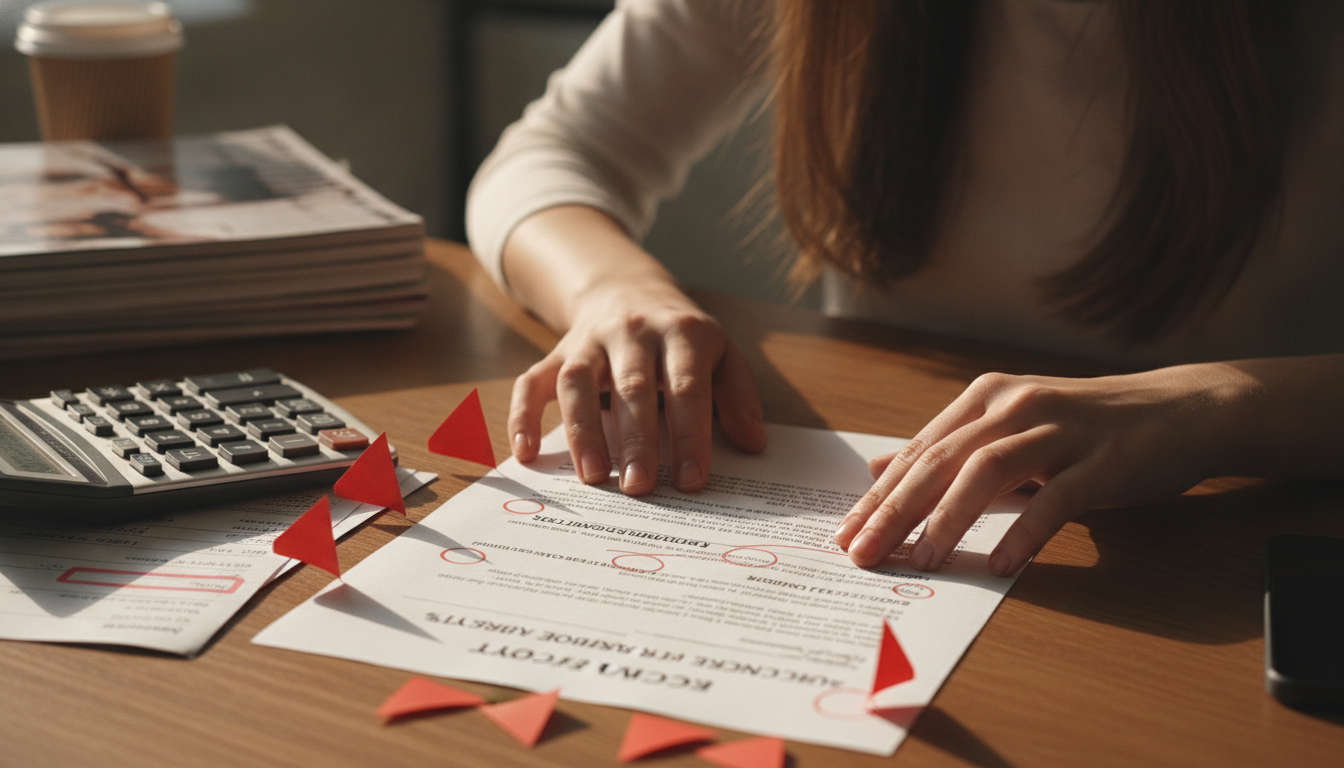
The contract shows whether a modeling agency is planning fraud or operating legitimately. Always take time to read the contract. Even better: show it to a lawyer or a consumer protection organization. Fake agencies hide traps in the fine print.
Typical problem clauses are long contract terms with no way to cancel, automatic renewals, or exclusivity clauses that forbid you from working with other agencies. Legitimate contracts run one to two years at most and have clearly defined notice periods of three months.
Pay special attention to cost clauses. Are "development costs," "marketing fees" or "administrative fees" listed? Those are warning signs. All costs should be itemized transparently. If anything is unclear: don't sign.
These Contract Items Must Be Clearly Defined
- Commission rate in percent and how it is calculated
- Contract term with clear notice periods
- Exact definition of the rights and obligations of both sides
- Rules on image rights and how images may be used
- A list of all costs that could come your way
- Liability exclusions and their limits
Red Flag 5: No Online Presence or an Unprofessional Website
In the digital age, a professional website is a must for legitimate modeling agencies. You can often spot a fake modeling agency by its amateurish web presence alone. Spelling mistakes, stock photos instead of real model portfolios and missing contact details are clear warning signs.
Check the legal notice (Impressum) carefully. Under German law, every commercial website must include a complete Impressum with company name, address and authorized representatives. If it's missing or lists only a P.O. box address, stay away.
If you google the agency's name, independent sources should show up: mentions in trade magazines, social media profiles with real followers, reviews on platforms. With fake agencies you often find only their own website and possibly warnings in forums.
Social media also gives you clues. Legitimate agencies post regularly about their models, show behind-the-scenes glimpses of shoots and tag clients. The followers should look authentic and interact. You can spot bought followers by the lack of comments despite high follower counts.
Red Flag 6: No Real Office or Constantly Changing Addresses
A professional modeling agency has a permanent office in a good location. Modeling scams often take place in back courtyards, hotels or co-working spaces. Always arrange an in-person meeting before you sign anything.
Ask to be invited to the agency's offices for the first meeting. Pay attention to the surroundings: is there a reception team? Can you see portfolios of real models? Do the rooms look like a functioning office or like an empty set?
If the agency changes addresses frequently or lists only a P.O. box, extreme caution is called for. Legitimate agencies have long-term leases and are proud of their location. In Germany, a look at the commercial register (Handelsregister) shows you how long the company has existed and whether the managing director changes.
Red Flag 7: They Take Everyone, With No Selection or Standards
Paradoxically, it's a bad sign when an agency wants to sign you immediately without vetting you. Legitimate agencies have clear selection criteria. They look specifically for models who fit their portfolio and their clients.
At professional agencies you go through a multi-stage process: an application with photos, possibly a casting, test shoots. They take your measurements, analyze your look and honestly discuss your market chances. Some applicants get turned down, which is normal and professional.
A fake modeling agency, by contrast, takes everyone. Its business model isn't based on successful placements but on the upfront payments of as many "models" as possible. The more people sign, the more they earn, regardless of whether you ever get a job.
By the way: if you're looking for legitimate ways to earn money online while making use of your good looks, there are other options too. Many young women, for example, use social media strategically for modeling jobs or explore alternative income sources where they can work on their own terms.
How to Protect Yourself From Modeling Agency Fraud
Research is your best tool. Before you even schedule a first meeting, google the agency along with terms like "reviews," "fraud" or "scam." Read reviews on different platforms, not just on their own website.
Talk to other models. In forums, Facebook groups or on Instagram you'll find communities that share experiences. Ask specifically about the agency that contacted you. The modeling community warns each other about fake providers.
Get professional advice. Consumer protection organizations offer free initial advice on contracts. Your local chamber of commerce can also tell you whether a company is properly registered. Those ten minutes of research can save you years of trouble.
Trust your gut. If something sounds too good to be true, it usually is. Legitimate modeling careers take time, work and often a bit of luck. There's no shortcut to success, and certainly none you have to pay for in advance.
Legitimate vs. Fake Agencies: A Direct Comparison

Legitimate modeling agencies invest in you because they earn from your success. They have established client contacts, regularly place jobs and can show proven results. Their models actually appear in campaigns, on runways or in magazines.
The application process is structured. You submit photos, get honest feedback and possibly go through a casting. If your measurements or your look aren't in demand, they tell you openly. A rejection is nothing to be ashamed of; it shows that the agency knows what it's doing.
Fake agencies, on the other hand, live off false hopes. Their income comes from comp card shoots, workshop fees or overpriced "development programs." The promised jobs never materialize. After a few months and a lot of money spent, you realize: you were only seen as a source of cash.
Alternative Routes: Self-Promotion and Online Platforms
You don't necessarily need an agency to work as a model. Many successful models build their own brand through social media. Instagram, TikTok or specialized platforms allow direct contact with photographers and brands.
Online model databases offer a middle path. You create a free or low-cost profile and get found directly by clients. Here too, though, watch out for legitimate providers. Platforms that charge high monthly fees without guaranteeing jobs deserve skepticism.
What matters with self-promotion: invest in a professional portfolio, but keep costs under control. A good shoot with an established photographer costs between $220 and $550. Anything above that should have very good reasons. Especially when you're just starting out, high-quality smartphone photos are often enough for first applications.
What to Do If You've Already Become a Victim
If you've already paid money to a fake modeling agency, you have options. First: don't pay anything more. Cut off contact, don't sign anything else and document all communication.
Contact a consumer protection organization. They can assess whether the contract can be challenged and whether you're entitled to a refund. Under German consumer protection law, contracts signed away from business premises often come with a 14-day right of withdrawal.
File a police report for fraud. Even if your individual case may not be pursued, reports help to identify patterns and trigger larger investigations. The "StarModel Agency" in Los Angeles was only exposed in 2023 because enough victims filed complaints.
Share your experience online. Warn others in forums, on review platforms or in social media groups. The more people know about your experience, the fewer new victims the agency will find. Just make sure to stick to the facts and not to insult anyone, or you risk legal warnings.
Frequently Asked Questions: Spotting a Fake Modeling Agency
How can I spot a fake modeling agency right away?
A fake modeling agency demands upfront payments for comp cards or shoots before you've had your first paid job. Legitimate agencies earn through commission on your fees, not through fees paid by you.
Are modeling agencies even allowed to charge me money?
Legitimate agencies may charge small costs for special services, but never large sums upfront. A commission of 15-25% on booked jobs is typical. Anything above that, or advance payments over $220, is suspicious.
What should I do if I've already signed with a fake agency?
Check your right of withdrawal right away. For contracts signed away from business premises you often have 14 days. Contact a consumer protection organization for legal advice and don't pay any further amounts.
Can I succeed as a model without an agency?
Yes, many models start their careers through social media or online platforms. With a professional portfolio and targeted self-promotion, you can work directly with clients without agencies in between.
Where can I find legitimate modeling agencies near me?
Research agencies that are members of industry associations, can show verifiable results and have real offices. Read other models' reviews and never let yourself be pressured into signing immediately.
Conclusion: Knowledge Is the Key to a Safe Modeling Career
Spotting a fake modeling agency protects you from financial losses and disappointment. The seven warning signs, from upfront costs to high-pressure tactics to missing references, help you tell legitimate providers from fraudulent ones.
Take time to research before you sign contracts. Legitimate agencies don't mind if you check their references or show the contract to a lawyer. They know that professionalism and transparency are part of a successful working relationship.
Your modeling career should be built on trust, fair terms and realistic expectations. Whether you work with an established agency or go your own way through social media: do your homework, question promises and never pay for uncertain future prospects. Start now with the knowledge you need and find the right path for your modeling career.